
April 2026 Newsletter

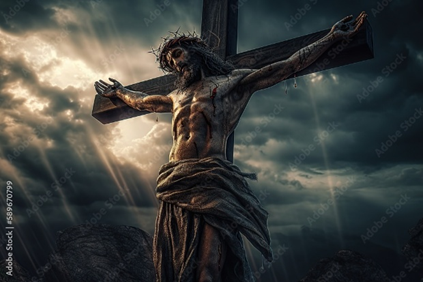
It is so hard to admit that one is a sinner; it is so hard to climb the hill of Calvary and kneel beneath a cross and ask for pardon and forgiveness. Certainly it is hard.
But it is harder to hang there.
Archbishop Fulton Sheen
Quotes of the month
You exist only because God wills that you exist. You were made by God and for God, and until you understand that, life will never make sense.
Rick Warren, The Purpose Driven Life
When we understand that each day isn’t one more day, but one less, we start giving more value to what truly matters.
Father Cedric Pisegna
The Church exists for the glory of God, not for the entertainment of men.
Hope For Our Times website
Entertainment and amusements are the work of the enemy to keep dying men from knowing they’re dying.
A.W. Tozer
(editor’s note: Of all the articles, newsletters, postings, et cetera that I have written over the past few years, none have resulted in more positive reader comments than my six-part series on Jesus’ Sermon on the Mount; most of which expressed a thank you because, “I always wondered what that really meant.” So with that intro, I thought I would re-publish them over the next few newsletters in case you missed it the first time. Thank you.)
A six-part series – Questions about the Sermon on the Mount answered – What did Jesus mean in today’s language
by Frank Paul
The main part of the Sermon on the Mount, or the Beatitudes, is found in the beginning of Matthew, Chapter 5; however, the Sermon on the Mount continues for another two chapters. This month let’s cover what Jesus said in Mattew 5:39, “Love thy neighbor.” Then later in Matthew 22:39 again Jesus says, “Thou shalt love thy neighbor as yourself.”
Well, clearly Jesus has not met any of my neighbors. Seriously, Jesus, these people get under my every nerve. So here we go again, what does Jesus really mean by saying this.
When we hear “love” in English it usually just has one meaning, although the word is grossly overused; but the Greek definition of “love” has six meanings, the Hebrew has five, and the Aramaic has eight. Once again, this highlights the shallowness of the English language. I like the Greek definitions the best: familial (family) love, platonic love, romantic love, self-love, guest love, unconditional love. The “guest love” is key here.
Some Hebrew definitions are kindness to guests, acts of kindness, romantic, self, and unconditional. “Kindness to guests” is key here.
Aramaic definitions are unconditional, civility to guests, selfish, romantic. “Civility to
guests” is key here.
The different meanings and levels of “love” now makes this saying of Jesus more palpable. I do not need to love my neighbor as I love my wife. I only need to be civil, to be kind instead of snapping back some snarky comments. Oftentimes the absence of words is a show of kindness. I am treating my neighbor as if I might treat an unwelcome guest or relative in my home. Not being overtly mean, just putting up with him or her; that in and of itself is “loving my neighbor.”
What has previously confused people about this saying was they were thinking about the English definition of “love” and not the 1st Century definition and usage, similar to meek, turn the other cheek, and salt had different meanings and connotations back then than they do now.
So the good news after our research is you don’t have to lean over the fence and give your neighbor loving smooches, you can just put up with him and not be mean; no need to. Loving him as you would love yourself can be related to something as simple as you wouldn’t be mean or unkind to yourself, so why treat your neighbor that way?
Hopefully this helps clear up one of Jesus’ sayings during His Sermon on the Mount.
Prayer Card #23
by Emmett Fox
You must believe that prayer can and will do anything. Have faith in your own faith.
We doubt because we can’t see it, we can’t feel it, we can’t smell or taste it; but yet we believe in gravity and all kinds of other things that we can’t necessarily comprehend.
Of all things to believe in and have faith in, I would say that Jesus should rank right at the top. God has given us the gift of grace so that we might have faith; faith in Him, His Son, and the Holy Spirit. All you have to do is read through the New Testament and you will see the unbelievable love that Jesus has for His children. Believe in that, have faith that Jesus hears your prayers, and rely on His steadfast love and compassion He has for us.
Prayer is communicating with God. Your sincere, heartfelt prayers will not go unanswered. You have developed and grown your faith through your study of the Bible; now have faith in your own faith and in God’s love.
Jesus was not speaking in riddles or metaphors when he said, “The Eye of a Needle.”
by Frank Paul
When Jesus was attempting to explain to His disciples that we are not to be overly concerned with worldly riches, but to build up our riches in heaven because that is where we want to spend eternity, He said to them, “It is easier for a camel to go through the eye of a needle, than for a rich man to enter into the kingdom of God.” Matthew 19:23 – 24.
At first read we may think, “Well, no kidding, Jesus, a man or woman can’t fit through the eye of a needle, so we get it.” But upon further research into 1st Century times, it turns out there really was such a thing as “an eye of a needle,” and not the sewing kind.
During that time, Jerusalem and other major cities in the area were constantly being invaded by the enemy, and the main point of entry was the large gate to the city. So over the years the Israelites developed extremely heavy, solid, thick, tall, reinforced front gates,
making it difficult for the bad guys to break down. However, the citizens of the city still had to come and go and bring commerce, water, et cetera in and out of the city, and it became increasingly burdensome to open and close that heavy, huge front gate; it took at least four men.
To alleviate this problem, large cities that were well fortified with tall walls and huge front gates, came up with a solution: a smaller gate or entranceway built into the main gate or off to the left of the main gate for people, animals, carts and the like to pass through much more easily; but it was very small, just wide enough for a wagon or cart to fit through, and it was short. It was designed this way so two or three men could not barge through at the same time.
Back in that time camels were used to transport goods, people, and whatever was needed into the city, but the camels could not fit through standing up, so they had to first unload the camel, get the camel on its knees, and push and tug on the poor guy and hold its head down, until they could finally nudge it through the small gate, because they could not leave it outside, it would get stolen or killed. A very arduous, cumbersome, time-consuming ordeal.
Back in the 1st Century, this smaller gate off to the side of the larger well-fortified gate was called “The eye of the needle.”
So Jesus was using a real-world example of just how hard it is to get into heaven if you try to cling onto all your worldly possessions and not unload them, prioritizing your life to what is important, which is where you will spend eternity; and He was giving His listeners a vivid example that they could relate to and understand.
And this is another example of why it is so important at times when you find reading the Bible difficult, to remember that words and examples used in the Bible we’re referring to a different time, literally 2,000 years ago, if not more, and we should not get frustrated, but make the effort and do some digging into other books or online research to realize the true meaning of the words and phrases as used in Biblical times. By doing so, the Bible becomes much more alive and meaningful to us now during our time.
Hope this helps clear up a phrase used by Jesus back in the day.
Reader feedback is important to us here at The Sower of Seeds, so if you have a verse in Scripture that is troublesome to you or hard to understand, forward it to us and we
will do our best to do the research and answer it for you. Emails are always read and responded to. Thank you.
Email us at frankpaul@thesowerofseeds.com
(editor’s note: There has been much dispute that such a smaller gate really existed, but if you dig deep enough, you will find examples in other Biblical writings, and some really old pictures of a smaller gate within the larger gate.)
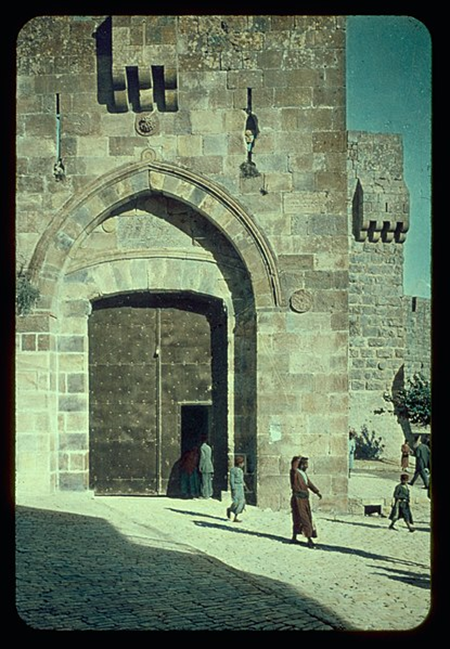

It is explained otherwise; That at Jerusalem there was a certain gate, called, The needle’s eye, through which a camel could not pass but on its bended knees and after its burden had been taken off; and so the rich should not be able to pass along the narrow way that leads to life, till he had put off the burden of sin, and of riches, that is, ceasing to love them.
Anselm of Canterbury as cited in Catena Aurea, Thomas Aquinas, CCEL Edition.
copyright@TheSeedSower2026
The Sower of Seeds
P.O. Box 815
North Olmsted, Ohio 44070


Comments